LIGHT AS CULTURE AND ENGINEERING

Flos studies what a luminaire makes possible

Since the 1993 operating foundation recorded in this site’s brand brief, the organization has developed around a simple discipline: a lighting object must hold architectural meaning while its optical, electrical and installation decisions remain legible to the project team. That perspective connects designers, product engineers, lighting specialists and technical support across global project conversations.

“Form is not the finish line. The real work is coordinating distribution, visual comfort, material behavior, control and maintenance into one coherent experience.”

Flos approaches architectural and decorative lighting as a relationship between people, surfaces and time. A pendant can establish scale at noon, soften a dining room after dusk and become part of an energy-management sequence after closing. Those different states require dialogue between creative intent and measurable criteria.

Spaces for observation and verification
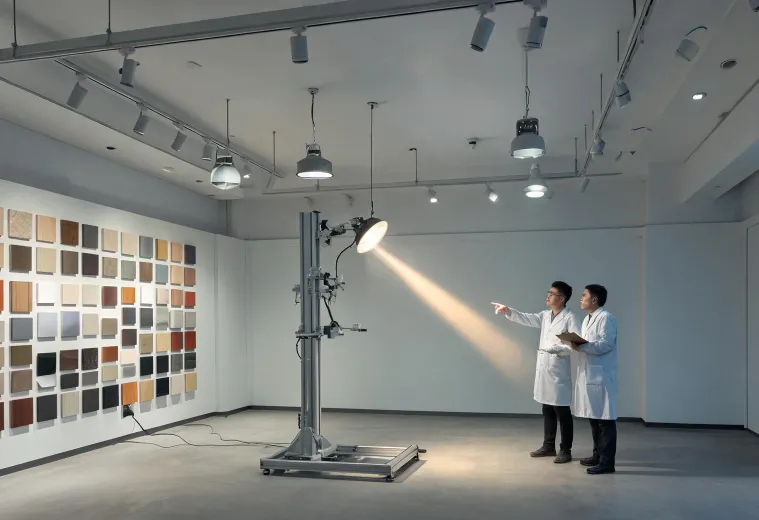
Lighting mock-up studio with photometric instruments

Optical review

Beam edges, cutoff, wall texture and source visibility are inspected alongside calculation outputs. A nominal beam angle cannot describe every transition or reflected condition.

Control behavior

Representative drivers, sensors and scenes are exercised for low-end dimming, fade behavior and interface response. Results apply to the tested combination, not every substituted component.

Material dialogue

Finish samples are viewed under intended CCT and spectral conditions because polished metal, stone, timber and textiles can shift the perceived balance of a room.

Project reading list

01

Reading IES and LDT data in context

A field guide to luminous intensity, distribution shape, mounting position and modeled surface assumptions.

Request resource
02

CCT, CRI and TM-30 selection notes

A practical outline of color appearance, fidelity and gamut considerations for hospitality, retail and residential interiors.

Request resource
03

Controls coordination worksheet

A checklist for DALI-2 addressing, 0–10V zoning, occupancy sensing, daylight harvesting and commissioning ownership.

Request resource

The organization’s current brand brief records a 760+ person team serving 45 countries, with UL, CE and RoHS credentials listed at brand level. Product eligibility varies by family and geography, so a project submittal must confirm the exact mark and model rather than extending a corporate credential to every luminaire.

Continue the inquiry through a real project

Bring a room, a material palette and a performance question.